Table of Contents
- Understanding Christmas Light Installation Costs
- What Factors Influence Your Installation Price
- Professional Christmas Light Installation Cost Breakdown
- Holiday Lighting Installation Packages Explained
- DIY vs. Professional Installation: What You Save and Sacrifice
- Finding Reliable Local Installers and Vetting Contractors
- Safety, Insurance, and Peace of Mind
- Frequently Asked Questions
Last Updated: September 25, 2026
Understanding Christmas Light Installation Costs
Professional christmas light installation costs vary based on property size, design complexity, and scope of work. Cheap isn’t always affordable, and expensive doesn’t guarantee value.
Ask what you’re paying for: labor, materials, design expertise, safety compliance, and warranty coverage. Wildly different quotes usually reflect different service levels.
Projects range from simple classic displays to elaborate custom designs with smart controls. Understanding your needs is the first step toward a realistic budget.
Ask installers specifically what’s included in their quote: labor only, materials, design consultation, takedown, storage, or warranty coverage. The cheapest quote often excludes several of these items, making it impossible to compare fairly.
What Factors Influence Your Installation Price
Several variables determine whether your christmas light installation will be straightforward or complex, and understanding each one helps you anticipate costs and make informed decisions.
Property size and roofline complexity is the primary cost driver. Installers charge based on linear footage of roofline and access points. A property with 150 linear feet of roofline typically requires less material and labor than one with 400 linear feet. Steep pitches and complex angles increase labor time and may require specialized equipment.
Material quality directly impacts both upfront cost and long-term value. LED systems may have a higher initial cost but are known for using less electricity and lasting longer than incandescent options, potentially offering long-term value. Professional-grade clips and fasteners prevent mid-season failures and callbacks.
Design scope determines material and labor requirements. Basic roofline lighting is most affordable. Custom garland, wreaths, accent lighting, and color-changing systems increase costs. Smart lighting integration can increase the overall investment.
Accessibility and safety considerations affect pricing significantly. One-story homes with clear access cost less than two-story properties with steep rooflines and obstacles. Specialized equipment and complex electrical layouts increase labor costs. Proper safety protocols protect both crew and property.
Seasonal timing influences availability and pricing. Early bookings (September-October) offer better availability and potentially lower rates. Late-season bookings often carry premium rates or longer waits.
Electrical infrastructure on your property can affect installation complexity. Homes with multiple outlets and recent upgrades are simpler to work with than older homes with limited outlets or outdated wiring.
Professional Christmas Light Installation Cost Breakdown
When you receive a quote for professional christmas light installation, here’s what’s typically included:
Labor represents the largest component. Installers assess your property, plan the layout, secure materials safely, test connections, and ensure safety compliance. Complexity determines whether this takes hours or days.
Materials include lights, clips, fasteners, extension cords, and custom decor. LED lighting is standard because it uses less electricity and lasts longer than incandescent options. Weather-resistant fasteners ensure durability.
Design consultation is often included. A designer visits your property, discusses your vision, and creates a layout that maximizes curb appeal. Custom designs cost more than generic perimeter lighting.
Installation and testing includes securing lights, checking connections, managing electrical load, and testing the display. This prevents failures and safety hazards.
Takedown and storage services handle removal and safe storage of materials, or you can store lights yourself.
Warranty coverage varies by provider. Many professional installers offer guarantees on workmanship and materials, protecting you if lights fail during the season.
Holiday Lighting Installation Packages Explained
Most professional installers offer tiered packages designed for different budgets and preferences. Understanding these options helps you choose what makes sense for your situation.
Basic packages include roofline lighting, standard clips, and professional installation. They’re ideal for homeowners who want professional quality without premium pricing.
Standard packages add design consultation, accent lighting on architectural features, and simple custom decor. They offer better visual impact and personalized attention.
Premium packages feature custom design, extensive coverage, custom wreaths and garland, smart controls, and comprehensive warranty. They’re for homeowners who want a statement display.
Commercial packages are designed for business properties, HOAs, and government facilities. They accommodate larger scale, longer operating hours, and more complex electrical requirements. If you manage an HOA or commercial property, Commercial Holiday Lighting services are specifically designed to handle the unique demands of larger installations with extended warranties and maintenance packages, since downtime during the holiday season directly affects business operations and community satisfaction.
The right package depends on your property size, desired visual impact, and budget. A modest home might be perfectly served by a basic package, while a commercial property or large estate typically requires premium options to achieve the desired effect.
Avoid choosing a package purely based on price. A cheap package that doesn’t cover your property adequately will look sparse and unfinished. Conversely, overpaying for features you don’t need wastes money. Match the package to your actual needs and property size.
DIY vs. Professional Installation: What You Save and Sacrifice
The DIY approach appeals to budget-conscious homeowners. You buy lights at a retail store, rent a ladder, and install everything yourself. In theory, this saves on labor costs. In practice, the savings are often smaller than expected, and the trade-offs extend far beyond installation day.
Upfront time and physical effort are substantial. You’ll spend a significant amount of time on a ladder, often in cold weather, securing clips, testing connections, and troubleshooting failed lights. If you’re uncomfortable with heights or physical labor, this becomes stressful rather than enjoyable. There’s also genuine personal safety risk, falls from ladders cause serious injuries every year, and improper electrical connections create fire hazards that homeowners often don’t recognize until something fails.
Material quality and durability suffer with typical DIY approaches. Retail lights sold at big-box stores are frequently cheaper than professional-grade options, but they’re also designed for shorter lifespans. Consumer-grade incandescent strings fail more often, require more maintenance, and don’t last as long in outdoor conditions. You might save on labor but could incur additional costs replacing failed lights mid-season, buying additional extension cords, or purchasing new clips because the originals corroded or broke. Professional-grade LED systems, by contrast, are built for 5-10 years of outdoor use and come with warranties that protect your investment.
Post-installation maintenance becomes your responsibility. Professional installers often include seasonal check-ins or maintenance packages that replace failed bulbs, adjust loosened clips, or address minor issues before they become visible problems. With DIY installations, you’re responsible for all troubleshooting and repairs. A burned-out section of lights mid-December means climbing back on the ladder in cold weather to diagnose and fix the problem yourself.
Storage and removal logistics are often overlooked. After the holidays, you need to safely remove lights, untangle cords without damaging them, and store everything properly to prevent tangling, rodent damage, or UV degradation during off-season months. Professional installers handle this as part of their service, or offer storage packages for a modest fee. DIY installers often end up with a tangled mess of lights in a garage corner, which makes next year’s installation even more time-consuming and frustrating.
Design expertise is absent from DIY installations. Your display might lack the visual balance, color coordination, and architectural awareness that professional designers bring. The result often looks amateur, uneven spacing, mismatched light types, or poor color choices, which undermines your home’s curb appeal rather than enhancing it.
Liability and insurance protection are critical differences. Professional installers carry liability insurance that protects you if someone is injured during installation or if damage occurs to your property. If a crew member falls from your roof or a light fire starts due to improper installation, their insurance covers it. With DIY installations, you’re personally liable for any injuries or property damage. This is a significant risk that many homeowners don’t consider until something goes wrong.
The real cost comparison is more complex than it appears. Professional installation eliminates personal safety risk, uses durable materials with warranties, includes design expertise, handles maintenance and removal, and provides liability protection. The added cost is worth the safety, quality, convenience, and peace of mind. For most homeowners, the question isn’t whether professional installation is cheaper than DIY, it’s whether the added investment is worth avoiding the hassles, risks, and hidden costs of doing it yourself. The answer, for most, is yes.
Finding Reliable Local Installers and Vetting Contractors
Choosing the right installer matters as much as deciding on your budget. A poor installation creates frustration, safety risks, and wasted money. Here’s how to evaluate contractors and find someone you can trust.
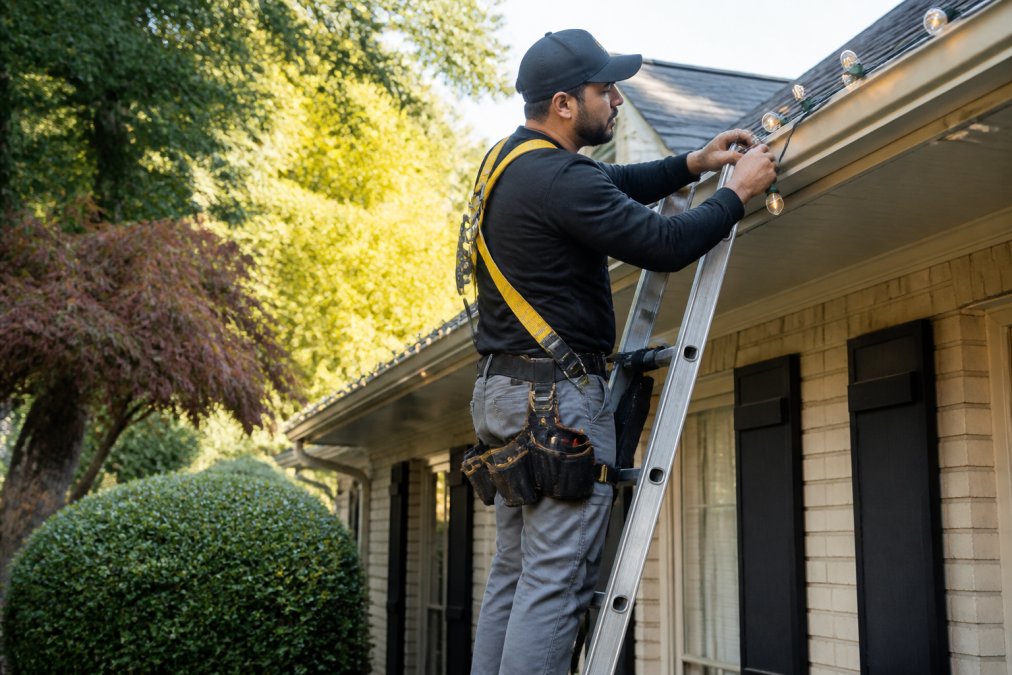
Start by asking for references and checking online reviews. Look for patterns in feedback, not just overall rating, but specific comments about communication, timeliness, quality of work, and how the company handles problems. A contractor with consistently positive reviews about reliability and follow-up is worth serious consideration.
Verify insurance and licensing.
Safety, Insurance, and Peace of Mind
Professional installation protects you in ways that DIY approaches cannot. Liability insurance is crucial. If an installer is injured on your property, their insurance covers medical costs and any legal claims. Without proper insurance, you could be personally liable for injuries that occur during installation.
Frequently Asked Questions
How much should I pay someone to put up Christmas lights?
Pricing for Christmas light installation depends on your property size, the complexity of your design, the number of lights, and your location. Labor costs vary based on whether you’re decorating a modest home or a large commercial property. Most installers charge by the hour or by the project scope. Get a detailed quote from local installers to compare pricing and understand what’s included in their service packages.
What is included in a professional holiday lighting package?
Standard packages typically include design consultation, installation of weather-resistant LED lights, clip and fastener systems, and setup of timers or smart controls. Many providers also offer take-down services after the season, storage solutions, and maintenance during the holiday period. Premium packages may add custom decor like wreaths and garlands. Always ask what’s covered before signing, some companies charge extra for design, removal, or storage.
Can I use the same installer year after year without being locked in?
Yes. Professional installers work on a seasonal basis, and you’re free to switch providers or handle installation yourself the following year. There are no long-term contracts required. However, many homeowners stick with the same installer because they appreciate the consistency, familiarity with the property, and the relationship built over time. Ask about loyalty discounts if you plan to return.
What safety and insurance protections should I expect from professional installers?
Reputable installers carry liability insurance to protect your property and their workers. They follow ladder safety standards and use proper equipment for roofline work. Before hiring, ask for proof of insurance and inquire about their safety record. Professional installers also warranty their work, so if lights fail or fasteners loosen due to weather, they’ll handle repairs. This protection is a key reason many homeowners choose professional installation over DIY.