Table of Contents
- Why Material Choice Matters for Rust-Proof Outdoor Light Fixtures
- Best Materials for Outdoor Lighting Fixtures
- Understanding Outdoor Light Fixture Wet Location Ratings
- How to Prevent Rust on Outdoor Lights
- Verifying Corrosion-Resistance Claims Before You Buy
- Installation Details That Affect Long-Term Corrosion
- Conclusion
- Frequently Asked Questions
Last Updated: October 10, 2026
Why Material Choice Matters for Rust-Proof Outdoor Light Fixtures
Choosing rust-proof outdoor light fixtures starts with understanding what you’re actually buying. The material of your fixture determines how long it lasts, how much maintenance you’ll need, and whether it will corrode in your climate.
Outdoor lighting faces constant assault from rain, humidity, salt air, temperature swings, and UV exposure. The right material handles these stressors for years; the wrong one rusts and fails within seasons.
The single biggest predictor of long-term performance isn’t price, it’s material and finish. A budget fixture made from the right material outlasts an expensive one made from the wrong one.
What separates lasting fixtures from failing ones: material composition, protective coatings, ingress protection ratings, installation method, and local climate. We’ll walk you through each.
Best Materials for Outdoor Lighting Fixtures
Some metals resist corrosion naturally; others need coatings. Understanding the differences helps you pick the right fixture for your climate.
Marine-Grade Stainless Steel (316 vs. 304)
Marine-grade stainless steel (316) is the gold standard for rust-resistant outdoor fixtures because it contains molybdenum, which prevents corrosion in high-salt environments. Standard stainless steel (304) works in dry climates but pits and corrodes near coastal areas or in humid regions. The molybdenum in 316 stops that.
316 stainless steel performs better in these conditions:
- Coastal properties where salt spray is constant
- Areas with high humidity and moisture
- Regions with frequent rain or fog
- Properties near pools or water features
304 stainless steel is adequate for:
- Dry climates with low humidity
- Inland locations far from salt air
- Covered outdoor spaces with limited exposure
- Budget-conscious projects in low-corrosion environments
316-grade stainless steel costs more upfront but outlasts 304 by years in harsh conditions, paying back through longevity.
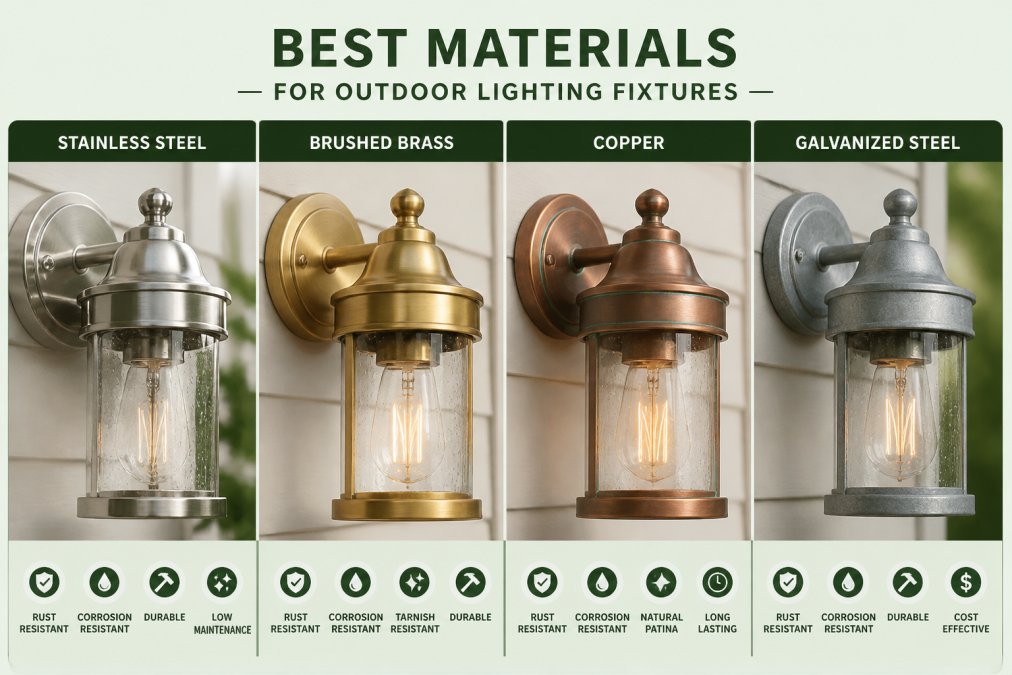
Solid Brass and Copper
Solid brass and copper naturally resist corrosion and develop a protective patina over time, making them excellent choices for rust-proof outdoor light fixtures. They oxidize rather than rust, creating a protective layer. The weathered finish appeals to some; others prefer to maintain the shine.
Brass and copper work well when:
- You want a fixture that ages gracefully
- Aesthetic patina is acceptable or desired
- You’re willing to polish occasionally to maintain shine
- You live in a humid or coastal climate
Brass and copper need occasional cleaning, water spots appear and salt air accelerates patina, but the underlying metal stays sound. A brass fixture from 20 years ago often outperforms a steel fixture from 5 years ago.
Solid brass and copper fixtures cost more initially but last decades with minimal corrosion issues.
Galvanized Steel and Protective Coatings
Galvanized steel is regular steel coated with zinc that prevents rust and corrosion, making it a cost-effective option for outdoor lighting. The zinc coating acts as a barrier; as long as it stays intact, the steel stays protected.
Galvanized steel fixtures are practical for:
- Budget-conscious projects
- Inland locations with moderate exposure
- Covered outdoor areas like porches or overhangs
- Commercial properties where cost matters
If the galvanized coating scratches or damages, rust starts at that point. The coating also degrades in harsh salt-air environments, requiring more frequent inspection in coastal areas.
Other protective coatings include powder coating, enamel paint, lacquer, and oil-based finishes. Coating quality matters as much as base material, a well-applied powder coat on steel can outperform a poorly finished brass fixture.
Aluminum with Corrosion Prevention
Aluminum naturally forms an oxide layer that prevents corrosion, making it lightweight and rust-resistant for outdoor light fixtures. It corrodes differently than steel, oxidation creates a white powdery layer rather than orange rust, and typically stops at the surface.
Aluminum fixtures excel in:
- Coastal and salt-air environments
- Humid climates where weight matters
- Lightweight applications
- Modern, minimalist designs
Aluminum is lighter than brass or steel and naturally corrosion-resistant without coatings. Anodized aluminum (treated with an electrical process) adds a protective layer, color options, and significantly improves appearance and corrosion resistance.
Understanding Outdoor Light Fixture Wet Location Ratings
The ingress protection (IP) rating system tells you how well a fixture resists water and dust. For outdoor fixtures, you need at least IP44 to handle rain and splashing; coastal properties should target IP54 or higher.
The first digit (0-6) indicates dust resistance; the second digit (0-8) indicates water resistance. Higher numbers mean better protection.
Common outdoor fixture ratings:
- IP44: Limited dust protection, splashing water resistance, best for covered outdoor areas
- IP54: Dust-resistant, water jet resistance, ideal for open patios and exposed walls
- IP65: Dust-tight, low-pressure water jet resistance, recommended for coastal areas and high humidity
- IP67: Dust-tight, temporary submersion resistance, suitable for near pools and fountains
For most residential outdoor lighting, IP54 is adequate; coastal properties should use IP65. Always check the IP rating when shopping for rust-proof outdoor light fixtures, it measures how well the fixture keeps water out. Low ratings trap moisture inside, causing rust even in corrosion-resistant materials.
How to Prevent Rust on Outdoor Lights
Prevention beats repair. Regular cleaning extends fixture life, dust and dirt trap moisture, so use a soft brush or cloth to remove buildup and rinse with fresh water, especially in coastal areas.
Inspect connections quarterly. Water enters through loose connections or gaps around wiring. Tighten hardware and seal gaps with outdoor-rated caulk to prevent internal corrosion.
Check for water pooling. If water collects on top of a fixture or in recessed areas, reposition it or add a small drain hole. Even a 1-degree tilt prevents standing water.
Apply protective oil annually to brass and copper fixtures to prevent patina buildup and maintain shine. Use products designed for outdoor metal; household products leave residue that traps moisture.
Replace damaged coatings promptly. If galvanized coating chips or powder coat scratches, rust starts quickly. Touch up with outdoor-rated paint or epoxy immediately.
Maintenance by Climate Type
Coastal and salt-air climates:
- Clean fixtures monthly during windy or stormy periods
- Rinse with fresh water after salt spray exposure
- Inspect for corrosion weekly during high-wind seasons
- Apply protective coatings every 6-12 months
- Replace any corroded hardware immediately
Humid subtropical climates:
- Clean fixtures every 2-3 months
- Inspect connections monthly during rainy seasons
- Ensure drainage holes stay clear
- Apply protective oil every 12 months
- Check for mold or algae growth on fixture surfaces
Dry inland climates:
- Clean fixtures every 6 months
- Inspect annually for dust accumulation
- Protective coatings needed less frequently
- Focus on checking electrical connections
- Minimal rust risk, but UV fading may occur
Cold climates with snow and ice:
- Clear ice and snow from fixture tops
- Inspect after freeze-thaw cycles for water damage
- Ensure drainage holes don’t freeze shut
- Salt from roads accelerates corrosion, rinse frequently
- Check connections before and after winter
The pattern is clear: more exposure means more maintenance. But even in harsh climates, 15 minutes of quarterly maintenance prevents most corrosion problems.
Verifying Corrosion-Resistance Claims Before You Buy
Marketing language doesn’t always match reality. “Weather-resistant,” “outdoor-rated,” and “durable” mean different things to different manufacturers. Here’s how to verify actual corrosion resistance before you buy.
Request the material specification sheet. Any reputable manufacturer provides this. It should clearly state the base material (e.g., “316 stainless steel,” “solid brass,” “anodized aluminum”). If the spec sheet is vague or unavailable, that’s a red flag.
Check the IP rating documentation. This should be listed on the product page or in technical specs. If no IP rating is provided, ask the manufacturer directly.
Look for material certifications. ASTM International and NACE International publish standards for corrosion resistance. Fixtures tested to these standards will mention it.
Ask about warranty coverage for corrosion. A lifetime warranty on rust-proof outdoor light fixtures is stronger than a 5-year warranty.
Compare pricing against known benchmarks. If a fixture costs 70% less than competitors using the same material, investigate why. Cheaper manufacturing, lower-quality coatings, or inferior components often explain the gap.
Request references or case studies. Manufacturers of quality rust-proof outdoor light fixtures can show you installations that have lasted years in harsh climates. Ask how long fixtures typically last in your climate. Vague answers suggest limited real-world testing.
Check online reviews for long-term performance. Look for reviews from customers in climates similar to yours. How do fixtures perform after 3-5 years? Do they show rust, discoloration, or electrical issues? User experiences reveal what marketing claims hide.
Installation Details That Affect Long-Term Corrosion
How you install a fixture matters as much as the material itself. Poor installation traps water inside, causing rust even in corrosion-resistant fixtures.
Ensure proper drainage. Water must flow away from electrical connections and interior components. Install fixtures with the opening facing downward when possible.
Seal all gaps and connections. Use outdoor-rated silicone caulk around the base where the fixture attaches to the wall or ceiling. Caulk around electrical conduit entry points.
Use stainless steel fasteners. Regular steel bolts and screws rust and stain the fixture. Stainless steel fasteners resist corrosion and won’t leave rust streaks running down your walls.
Install a drip loop in electrical connections. If wiring comes from above, create a loop below the connection point. Water follows the wire down, hits the loop, and drips off rather than running into the fixture.
Keep fixtures away from sprinkler spray. Even rust-proof fixtures corrode faster when hit by sprinkler water containing chemicals. Position lights outside the spray pattern.
Avoid direct contact with treated wood or painted surfaces. Some wood treatments and paints are acidic and accelerate corrosion. Use spacers or brackets to keep fixtures away from direct contact with building materials.
Allow air circulation around fixtures. Poor ventilation traps moisture. Mount fixtures with at least 2 inches of clearance on all sides when possible. This lets air flow around the fixture and dries moisture faster.
For commercial properties or large installations, Houston Light handles these installation details as part of our comprehensive service. Proper installation from the start prevents costly repairs later.
Conclusion
Choosing rust-proof outdoor light fixtures comes down to matching material to your climate, understanding protection ratings, and maintaining fixtures properly. Marine-grade stainless steel, solid brass, anodized aluminum, and properly coated galvanized steel all work; the right choice depends on your location and budget.
Verify material claims before buying. Check IP ratings. Inspect quarterly. Clean regularly. When you get these basics right, outdoor lighting lasts years without corrosion problems.
At Houston Light, we specify rust-resistant materials, ensure proper IP ratings, and handle installation details that prevent water intrusion. Our team brings 15 years of experience selecting fixtures that perform in your climate. We offer a lifetime warranty on all installations, giving you complete confidence in long-term durability. For residential properties, explore our Holiday Decorating services to enhance your outdoor spaces with fixtures designed to last. Get a free estimate and let us design rust-proof outdoor lighting for your property.
Frequently Asked Questions
What materials are best for rust-proof outdoor light fixtures?
Marine-grade stainless steel (316 grade), solid brass, copper, and galvanized steel are the top choices for rust-proof outdoor light fixtures. Stainless steel 316 resists salt air and coastal conditions better than 304. Brass and copper develop a protective patina over time. Galvanized steel uses a zinc coating to prevent rust. Aluminum works well with protective finishes like powder coating. The best choice depends on your climate, exposure level, and maintenance preference.
What does a wet-location rating mean for an outdoor light fixture?
A wet-location rating indicates an outdoor light fixture can withstand direct water exposure, rain, and moisture without electrical hazard. The Ingress Protection (IP) rating system specifies this: IP65 means dust-tight and water-jet resistant; IP67 means temporary submersion protection. Fixtures marked for wet locations have sealed connections, corrosion-resistant materials, and proper drainage. Always verify the wet-location label before installing fixtures in high-moisture areas like near pools, fountains, or coastal zones.
How do you prevent rust on outdoor light fixtures?
Prevent rust through material selection, regular maintenance, and proper installation. Choose corrosion-resistant materials like stainless steel or brass. Clean fixtures 2-3 times yearly with mild soap and water, especially in humid or coastal climates. Apply protective oil to brass or copper annually. Ensure proper drainage and ventilation around fixtures to prevent moisture buildup. Use stainless steel fasteners instead of standard steel. Inspect seals and gaskets yearly and replace if cracked or loose.
Are aluminum outdoor light fixtures rustproof?
Aluminum itself doesn’t rust like steel, but it oxidizes when exposed to moisture and salt air. A protective finish, powder coating, anodized coating, or paint, is essential for true rust prevention. Anodized aluminum creates a dense oxide layer that resists corrosion in most climates. In coastal areas, marine-grade aluminum with high-quality protective finishes performs better than untreated aluminum. Always check the finish type and warranty when selecting aluminum fixtures for outdoor use.