Table of Contents
- Why Professional Holiday Lighting Removal and Storage Services Matter
- How to Safely Hang Roof Lights Before Storage Season
- The Professional Removal Process Explained
- Benefits of Professional Light Storage and Climate Control
- Holiday Lighting Maintenance Tips for Year-Round Care
- Safety, Liability, and Insurance Considerations
- Residential vs. Commercial Removal and Storage Services
- Scheduling Your Removal and Planning Ahead
- Frequently Asked Questions
Last Updated: September 2, 2026
Why Professional Holiday Lighting Removal and Storage Services Matter
When the holidays end, the real work begins. Taking down thousands of individual light strands, clips, and fasteners from rooflines, gutters, and landscaping is physically demanding, time-consuming, and genuinely dangerous. This is where professional holiday lighting removal and storage services become invaluable. At Houston Light, we’ve managed countless takedowns across residential and commercial properties, and the difference between a DIY attempt and professional removal often comes down to safety, efficiency, and long-term preservation of your lighting investment.
Most homeowners underestimate how much labor removal actually requires. Factor in the risk of falls, electrical hazards, and potential damage to your property, and the cost-benefit analysis shifts dramatically. Professional holiday lighting removal and storage services handle everything from inspection and strand testing to organized packaging and climate-controlled storage, ensuring your lights are ready to shine again next season.
The real value isn’t just in the removal itself, it’s in how your lights are stored. Improper storage causes tangling, weather damage, and component failure. Lights left exposed to temperature swings, humidity, and pests often need replacement before the next season. Climate-controlled storage with organized packaging and inventory systems prevents these issues entirely.
How to Safely Hang Roof Lights Before Storage Season
Before your lights come down, understanding how they were installed matters. Proper installation sets the stage for safe removal. If you’re installing lights yourself this year or planning next year’s display, knowing the right techniques prevents problems during takedown.
Ladder Safety and Positioning
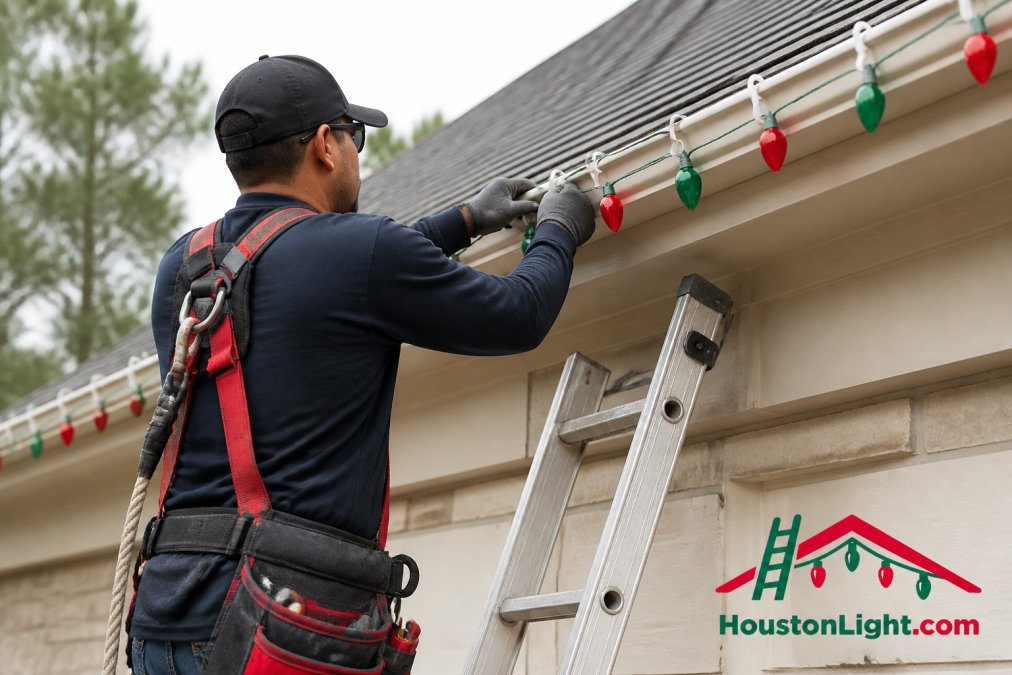
Ladder safety is non-negotiable when working at height. The majority of holiday lighting injuries happen because people rush or skip basic precautions. Position your ladder on level ground, never on a slope or uneven surface. Extend it at least three feet above the roofline so you can maintain three points of contact while climbing. Have someone stabilize the base, never work alone on a ladder, especially when handling lights and fasteners.
Wear shoes with good grip and avoid working in wet or icy conditions. If your roof is steep or your property is more than one story, this is a strong signal to hire professionals. Falls from ladders account for thousands of injuries annually, and holiday lighting work creates specific hazards: you’re reaching outward while holding materials, your hands are cold and less dexterous, and you’re often focused on the lights rather than your footing (the CDC).
When positioning the ladder, keep it close to your work area. Overreaching is the leading cause of falls. If you need to move, get down and reposition the ladder rather than shifting your weight or stretching. This adds time, but it eliminates the most dangerous moment of the job.
Securing Clips and Fasteners
Holiday lights attach with clips, hooks, or fasteners designed to hold strands securely without damaging your roof or gutters. Gutter clips grip the gutter edge without penetrating it. Roof clips use adhesive backing or non-penetrating fasteners. The key is matching the fastener to your surface and ensuring it’s tight enough to prevent sagging but not so tight that it damages the material.
When installing, space clips evenly, typically every 12-18 inches along a strand. This distributes the weight and prevents stress points that cause failure. Test each clip before moving to the next one. Clips that slip or rotate will fail during weather or when you’re removing lights.
For removal, work systematically. Don’t yank strands down; instead, gently loosen each clip, support the strand, then move to the next clip. This prevents tangling and reduces strain on the electrical connections. Clip removal should take time, rushing causes damage that shows up when you’re storing or reinstalling lights.
The Professional Removal Process Explained
Professional removal follows a systematic approach that protects both your property and your lighting investment. This is where the difference between DIY and professional service becomes most apparent.
Inspection and Strand Testing
Before anything comes down, professionals inspect every strand. This identifies burned-out bulbs, damaged insulation, corroded connections, and mechanical issues. Strand testing uses specialized equipment to verify that circuits are functioning properly. This step matters because it tells you exactly what condition your lights are in before storage.
Many people skip testing and discover problems next November, when they plug in lights that don’t work. Testing now prevents that frustration. It also helps you plan repairs or replacements during the off-season when you have time and aren’t rushing before the holidays.
If strands fail testing, professionals can often repair them on-site or during storage. A single burned-out bulb doesn’t mean the whole strand is useless; most issues are fixable. LED strands, which Houston Light specializes in, are particularly reliable, but even premium lights benefit from inspection and testing before storage.
Safe Takedown and Clip Removal
The actual removal process is methodical. Work starts at one end of a display and moves systematically to the other. Strands are gently disconnected, clips are carefully removed, and lights are coiled or packaged immediately to prevent tangling. This prevents the chaotic mess that happens when you just pull everything down at once.
Professionals use proper equipment, ladder stabilizers, safety harnesses for steep roofs, and tools designed for clip removal. They work in teams so someone is always spotting, and they plan the job to minimize time spent at height. What might take you 30 hours alone takes professionals 6-10 hours because they’re trained, equipped, and working efficiently.
During removal, any damage is documented. If a clip tore the gutter or a fastener left a mark, you know about it immediately. This transparency helps with any property maintenance or insurance considerations.
Benefits of Professional Light Storage and Climate Control
Once removal is complete, storage quality determines whether your lights will work next year. This is where professional holiday lighting removal and storage services deliver their biggest advantage.
Organized Packaging and Inventory
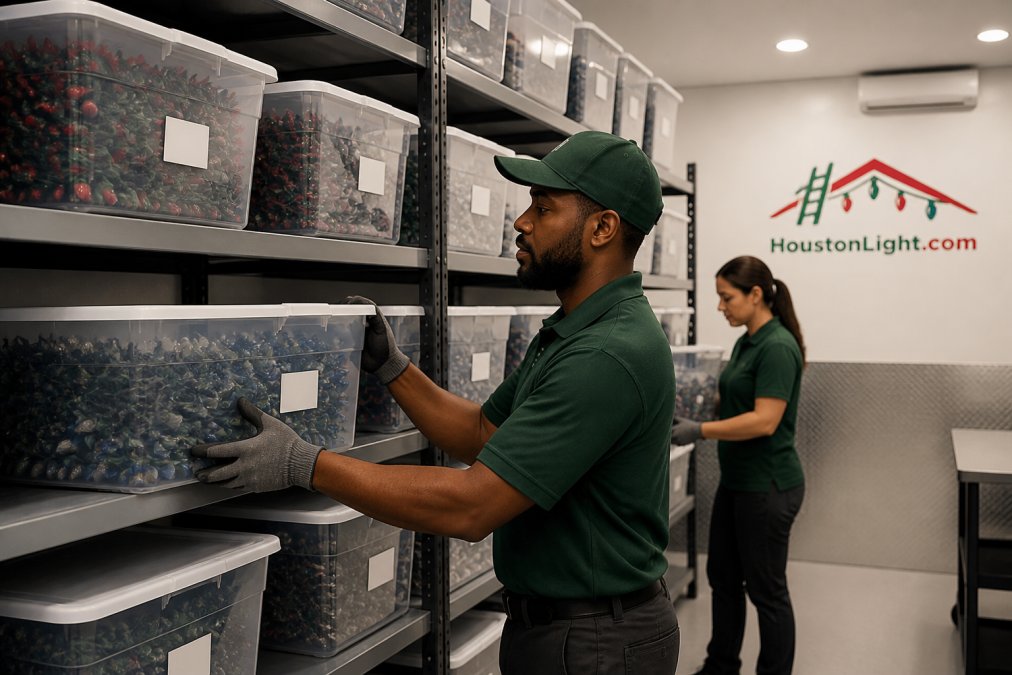
Professional storage facilities use standardized packaging systems. Each strand is coiled using techniques that prevent tangling, not just wrapped haphazardly in a box. Light strands are stored in labeled bins with inventory tracking. You know exactly what you have, where it is, and its condition.
This organization saves enormous amounts of time and frustration next season. Instead of untangling a mess of lights in November, you pull out organized, ready-to-install strands. For commercial properties running large displays, this inventory management is critical. You need to know if you have enough strands for next year’s design or if you need to order more.
Protection from Weather and Damage
Climate-controlled storage maintains consistent temperature and humidity. This prevents the expansion and contraction that damages insulation and connections. It also eliminates exposure to temperature extremes, moisture, and pests that degrade lights during off-season storage.
Lights stored in attics, garages, or basements experience temperature swings of 40-60 degrees between seasons (peer-reviewed research). They’re exposed to humidity spikes, dust, and sometimes rodent damage. Professional storage maintains 55-70 degrees and controlled humidity year-round. This environment preserves the integrity of LED strands, electrical connections, and fasteners.
Weather protection also matters for clips and fasteners. Metal clips stored outdoors corrode. Adhesive backing degrades in temperature swings. Professional storage keeps these components in usable condition for next season.
Holiday Lighting Maintenance Tips for Year-Round Care
Even with professional storage, some maintenance extends the life of your lighting system. Understanding these basics helps you maximize your investment.
Inspect lights before storage. Look for visible damage, cracked bulb covers, or discolored areas on the strand. These are early warning signs. Address them during the off-season when you’re not under time pressure. A repair now prevents a replacement later.
Test strands annually, even in storage. Plug them in once a year to verify they still work. This catches problems early. If a strand fails, you have months to repair or replace it rather than discovering it in November.
Keep strands organized and labeled. When you retrieve lights next season, you’ll know exactly what you have. This prevents overbuying new lights or installing mismatched sets. It also helps with design planning, you know your inventory before you commit to a display.
Store fasteners and clips separately from strands. Keep them in small labeled containers. This prevents damage to both the clips and the lights, and it makes next season’s installation faster. You’re not searching for clips or trying to untangle them from light strands.
Safety, Liability, and Insurance Considerations
This is the conversation most people avoid until something goes wrong. Professional holiday lighting removal and storage services carry liability insurance and workers’ compensation. If someone is injured during removal at your property, their medical costs and lost wages are covered, not your personal liability.
When you hire professionals, verify they’re licensed and insured. Ask for proof of workers’ compensation and general liability coverage. This protects both you and the crew. If an accident happens, you’re protected from catastrophic financial exposure.
For commercial properties, this is non-negotiable. Your business insurance may not cover injuries from uninsured contractors. Professional removal services eliminate this risk. Houston Light carries comprehensive coverage and maintains all required certifications, giving you peace of mind that the job is done safely and legally.
Property damage is another consideration. If a contractor damages your roof, gutters, or landscaping during removal, their insurance covers it. If you’re doing it yourself and cause damage, you’re paying out of pocket. Professional services shift this risk appropriately.
Residential vs. Commercial Removal and Storage Services
Residential and commercial properties have different removal and storage needs. Understanding these differences helps you choose the right service.
Residential removal typically involves roofline lights, pathway lighting, and some decorative elements. Displays are usually of varying lengths. Storage is often in a garage, attic, or dedicated space at the property. The timeline is flexible, most homeowners want removal done by early January, but there’s no hard deadline.
Commercial properties run larger, more complex displays. A shopping center, office building, or government facility might have many strands plus decorative elements like wreaths and garland. These displays are designed for maximum visual impact and often coordinate with landscaping or architectural features. Removal is time-sensitive, holidays end, and the display needs to come down quickly so the property looks professional.
Storage for commercial properties often requires professional facilities. On-site storage might not be available or practical. Climate-controlled storage with inventory management ensures the display is ready to reinstall next year without modifications or replacements.
Houston Light handles both residential and commercial holiday lighting removal and storage, with custom solutions for each property type. For commercial properties, we offer free on-site consultations to assess your specific needs and create a removal and storage plan that works for your schedule.
Scheduling Your Removal and Planning Ahead
Timing matters more than people realize. Scheduling removal too early leaves your property looking bare during the peak holiday season. Scheduling too late means lights are still up when you want them down, and you’re competing with everyone else for professional services.
Most professionals recommend scheduling removal for early January, after New Year’s but before the winter weather intensifies. This gives you a window when crews aren’t overwhelmed and properties aren’t competing for service.
For commercial properties, planning should start in September. You’ll want removal scheduled for December 26-31 so your property looks fresh and professional on January 1. This requires booking services early, popular companies fill up quickly during peak season.
When you schedule, provide details: the size of your display, the type of lights, any special storage requirements, and your preferred removal dates. This information helps professionals estimate the job accurately and plan their schedule. It also prevents surprises, you’ll know exactly what to expect and when the work will happen.
For next year’s planning, schedule installation in October. This gives you time to decide on display design, verify your stored lights are in good condition, and book professional installation before crews get busy. Waiting until November means limited availability and potentially higher costs.
Professional holiday lighting removal and storage services eliminate the physical risk, property damage risk, and storage headaches that come with DIY takedown. The peace of mind alone, knowing your lights are safely removed, professionally stored, and ready for next year, makes it worthwhile. Houston Light brings 15 years of experience, insured labor, and climate-controlled storage facilities to every removal and storage project. OSHA guidelines on ladder safety recommend professional help for work at height when property owners lack training and equipment. Get a free estimate and let us handle your removal and storage this season.
Frequently Asked Questions
Why should I hire professionals for holiday lighting removal instead of doing it myself?
Professional removal services eliminate safety risks associated with ladder work and roof access, which cause thousands of injuries annually. Professionals have the right equipment, insurance coverage, and experience to remove lights without damaging your property or the strands themselves. They also handle proper storage and testing, extending the lifespan of your investment and saving you time and stress during the busy post-holiday period.
What is included in professional holiday lighting storage services?
Comprehensive storage services typically include strand testing to identify damaged sections, organized packaging in labeled storage bins, climate-controlled facility protection, inventory tracking, and organized retrieval the following season. Professional storage prevents tangling, protects against temperature fluctuations and moisture, and ensures your lights are ready to use without additional preparation work when installation season returns.
How do I know if my holiday lights need maintenance before next season?
Professional maintenance checks include testing each strand for functionality, inspecting wiring and clips for damage, and identifying burned-out bulbs or loose connections. These holiday lighting maintenance tips help catch problems early. Signs you need service include flickering sections, visible damage to wires or clips, or lights that didn’t work at the end of last season. Regular testing during storage prevents disappointment when you’re ready to reinstall.
Is it safer to have professionals remove roof lights rather than doing it myself?
Yes. Roof light removal involves significant fall hazards, which is why professional installation and removal should always be handled by licensed and insured crews. Professionals understand proper ladder safety, know how to secure themselves on steep roofs, and carry liability insurance in case of accidents. This protects both you and your property from costly injuries or damage that DIY removal could cause.