Table of Contents
- Why Switch to Energy Efficient LED Holiday Lighting Displays
- Comparing LED Bulb Types: C7, C9, and Mini Lights
- The Measurable Benefits of LED Christmas Lights
- Choosing Weather-Resistant Holiday Lighting Materials
- Planning a Large-Scale Display: Design and Power Draw
- Calculating the ROI of Your LED Display Upgrade
- When to Hire a Professional Holiday Lighting Installation
- Conclusion: Bright Displays, Lower Bills
- Frequently Asked Questions
Last Updated: September 6, 2026
Why Switch to Energy Efficient LED Holiday Lighting Displays
Energy efficient LED holiday lighting displays use up to 80% less energy than traditional incandescent strings, translating to lower seasonal electricity bills without sacrificing the festive glow (energy.gov). For large installations, this efficiency is the difference between a modest seasonal bump and a noticeable spike in utility costs.
At Houston Light, we have spent 15 years designing and installing professional displays. Beyond energy savings, LED holiday lighting allows for more lights, longer run times, and richer color options while keeping power consumption manageable. This guide covers the bulb types, planning considerations, and cost calculations you need to build a display that is both spectacular and efficient.
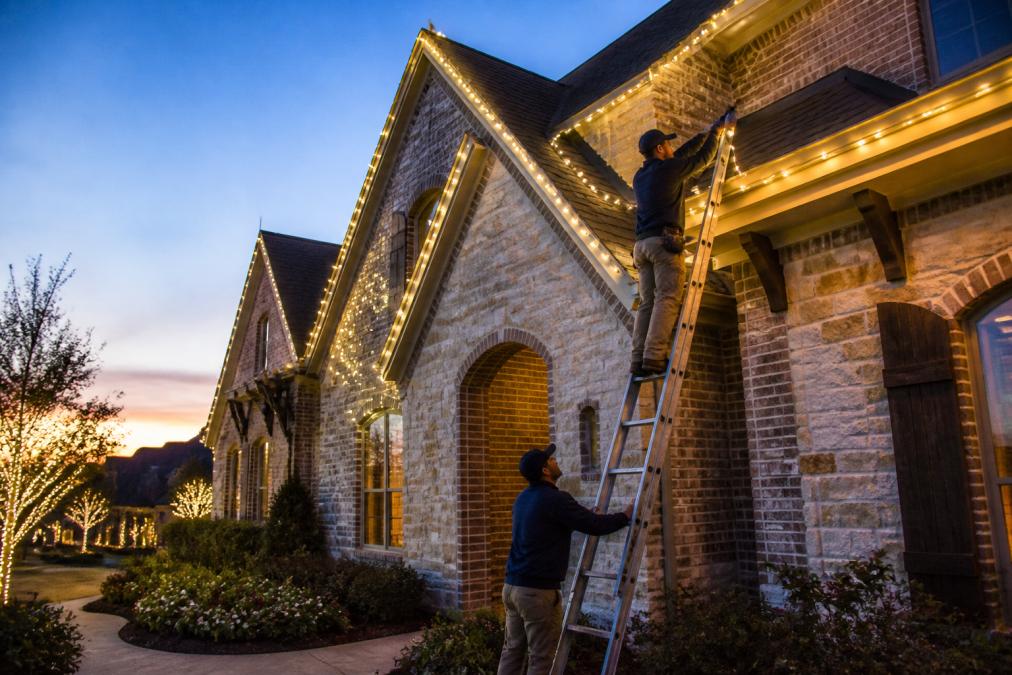
The real advantage becomes clear when you scale up. A typical incandescent string might draw around 100 watts, while an equivalent LED string draws only a fraction of that power. This lower power draw means you can connect more strings end-to-end without tripping breakers, and it opens the door to larger designs that would overload a standard residential circuit with older bulbs.
Comparing LED Bulb Types: C7, C9, and Mini Lights
Choosing the right bulb format is the first major decision. C7 and C9 bulbs are the larger, classic options used to outline rooflines, gables, and commercial buildings, while mini lights are ideal for wrapping trees, bushes, and railings where a denser, more delicate glow is preferred.
C9 bulbs, with their larger profile, are visible from a distance and create a bold outline that reads clearly from the street. C7 bulbs are slightly smaller and offer a similar classic look with more refinement. Mini lights excel at providing texture and depth, allowing you to create a layered, full appearance across landscaping features.
Understanding Lumen Output and Color Temperature
When comparing bulbs, lumen output and color temperature matter more than wattage. Lumens measure actual light output, and an LED bulb can achieve the same brightness as an incandescent while using a fraction of the energy. Color temperature, measured in Kelvin, determines whether the light appears warm or cool.
For a classic, elegant holiday aesthetic, most professional installations favor warm white, which sits around 2700K and mimics the soft glow of traditional incandescent bulbs. Cool white, often in the 4000K to 6500K range, provides a crisp, bright, almost icy look that pairs well with modern architecture or snow-themed displays. Vivid color options are also available for saturated reds, greens, and blues, and LED technology delivers superior color consistency across every bulb in the string.
The Measurable Benefits of LED Christmas Lights
The advantages of LED holiday lighting go far beyond the simple wattage comparison. While energy savings are the headline, a full accounting of the benefits includes lifespan, heat output, and a critical environmental factor that most guides overlook: what happens to your old strings when you upgrade.
Lifespan and Total Cost of Ownership
A standard incandescent mini-string is typically rated for about 2,000 hours of use. If you run your display for 6 hours a night over a 40-day season, that is 240 hours per year, meaning a traditional string might last only 8 to 10 seasons before burning out. In practice, the fragile filaments often fail after just a few seasons of handling, storage, and temperature swings.
LED strings, by contrast, are commonly rated for 25,000 to 50,000 hours. At the same usage rate, that translates to over 100 seasons of reliable operation. This longevity fundamentally changes the economics: when you factor in replacing incandescent strings every few years, the upfront price difference narrows significantly over a decade of ownership.
Heat Output and Safety Margin
Incandescent bulbs convert roughly 90% of their energy into heat rather than light (energy.gov). A standard C7 incandescent bulb can reach surface temperatures of 200°F or more, posing a real risk when draped over dry evergreen branches or placed near paper decorations (nist.gov). LEDs operate at a fraction of that temperature, typically below 100°F, making them dramatically safer.
This lower heat output also protects the wiring itself. Heat accelerates the degradation of insulation and connectors. A cooler-running system is less likely to experience melted sockets or brittle wires, which are common failure points in older incandescent displays.
The Environmental Lifecycle: Disposal and Recycling
The most significant environmental benefit of LED lighting is realized at the end of the product’s life. However, the transition to LED creates a pressing question: what do you do with the incandescent strings you are replacing?
Throwing old holiday lights into the regular trash is problematic. Incandescent strings contain copper wire, glass, and sometimes lead-based solder, which can leach into the soil over time. The good news is that holiday lights are highly recyclable, and the copper wire inside is valuable and can be recovered.
Several national retailers, including Home Depot and Lowe’s, have historically run holiday light recycling programs during the post-season period. Many local scrap metal yards also accept old light strings and will pay by the pound for the copper content. Before you toss a tangled mess of dead incandescent lights into the bin, check with your local waste management authority or search for a mail-in recycling program.
Consistent Light Quality
LED technology also delivers a quality of light that incandescent strings cannot match over long runs. Incandescent bulbs dim as voltage drops along the length of a string, which is why the last few bulbs on a long run often appear noticeably dimmer. LEDs maintain consistent brightness across the entire circuit.
Choosing Weather-Resistant Holiday Lighting Materials
The durability of your display depends on the materials you select, especially in climates that experience rain, wind, or freezing temperatures. Weather-resistant holiday lighting materials are rated for outdoor exposure and built to withstand the elements.
When sourcing lights, look for a high IP rating, such as IP65, which indicates the fixture is protected against dust and water jets. This rating is crucial for lights exposed to rain or snow. The wiring and connectors should also be heavy-duty, with thick insulation that resists cracking in cold weather and UV-resistant jacketing that prevents sun damage during storage.
A common mistake is using indoor-rated lights outdoors to save money. These strings lack the necessary waterproofing and UV resistance, and they can short out in wet conditions or become brittle and crack after a few weeks of sun exposure. The result is a safety hazard and a failed display in the middle of the holiday season.
Professional-grade clips and fasteners hold wires securely without damaging your roofline or gutters, preventing sagging and keeping the display looking crisp and intentional. Investing in proper materials is the difference between a display that lasts for years and one that needs constant repairs.
Planning a Large-Scale Display: Design and Power Draw
Planning a large-scale display requires a careful balance between aesthetic ambition and electrical reality. The design phase should start with a detailed layout of your property, mapping out where each run of lights will go and identifying the power sources available. This blueprint prevents overloading circuits. seasonal home maintenance.
Understanding Series vs. Parallel Circuits
Most modern LED strings are wired in parallel, which allows you to connect multiple strings end-to-end without a significant voltage drop. However, every string has a maximum number of connections, and exceeding this limit can cause the lights to dim or fail. Checking the manufacturer’s specifications for amperage limits is essential.
A structured approach to power management prevents most problems:
- Map every planned light run on a diagram of your property.
- Calculate the total power draw for each circuit by adding the wattage of every string.
- Identify which outdoor outlets will serve each section of the display.
- Use heavy-gauge extension cords for long distances to minimize voltage drop.
- Test each circuit before finalizing the installation to ensure it handles the load.
Advanced Smart Home Automation Integration
A basic timer is a starting point, but modern smart home integration transforms a static display into a dynamic installation. The most powerful tool is a smart plug or smart outlet rated for outdoor use. These devices connect to your home‘s Wi-Fi network and allow you to control your lights from a smartphone app, but the real value lies in the automation rules you can create.
Voice Control and Hub Integration: If your home uses a smart hub like Amazon Alexa, Google Home, or Apple HomeKit, you can integrate your holiday lights into your daily routines. A simple voice command, “Alexa, turn on the Christmas lights”, can activate the display. More importantly, you can create automation routines that trigger the lights based on sunset and sunrise times, which shift throughout the season. Instead of setting a fixed on/off time, the hub calculates the exact moment of dusk each day, ensuring your display is lit precisely when it becomes visible and turns off at a set hour, such as 11:00 PM.
Color-Changing Sequences and Scenes: For displays using RGB (red, green, blue) LED lights, smart integration unlocks choreographed color sequences. Smart controllers, such as those from brands like Govee or Twinkly, allow you to program the lights to pulse, fade, or cycle through colors in sync with music or on a set schedule.
Energy Monitoring: Many smart plugs include energy monitoring features, allowing you to track the real-time wattage draw of your entire display from your phone. Instead of estimating your energy usage, you can see exactly how many kilowatt-hours your display consumes each night. This data is invaluable for verifying your efficiency calculations.
When selecting smart plugs for outdoor holiday use, verify the device has an outdoor-rated enclosure (look for an IP65 or higher rating) and is rated for the total wattage of the strings you plan to connect. A standard indoor smart plug is not weatherproof and poses a shock hazard if exposed to moisture.
Managing Voltage Drop Over Long Distances
Voltage drop is a silent killer of large displays. When electricity travels through a long extension cord, the resistance of the wire causes the voltage to decrease, which is why lights at the far end of a 100-foot extension cord often appear dimmer. To mitigate this, use 12-gauge or 10-gauge extension cords for runs over 50 feet. Avoid daisy-chaining multiple light strings from a single outlet at the far end of a long cord; instead, run a dedicated heavy-gauge cord to the midpoint of your display and branch out from there.
For those who want to avoid the complexities of load calculation, circuit planning, and smart home configuration, a professional installation service handles all of this engineering. A professional crew assesses the power draw, plans the circuits, and ensures the display operates safely throughout the season. Houston Light’s Commercial Holiday Lighting and HOA Holiday Lighting services are built around this exact expertise, delivering turnkey displays for properties of any scale.
Calculating the ROI of Your LED Display Upgrade
Calculating the ROI of upgrading to LED lighting compares the upfront cost of new lights against the long-term savings in energy and replacement bulbs. While the initial purchase price of LED strings is higher than incandescent, the payback period is often surprisingly short for larger displays.
The primary savings come from reduced energy consumption. To estimate your savings, calculate the total wattage of your old display and your new display, multiply the difference by the number of hours the lights run each night and the number of nights in the season, and then multiply that figure by your local electricity rate.
The second source of savings is bulb longevity. Since LED bulbs last many times longer than incandescent options, you will not need to purchase replacement strings as frequently. The time saved on testing and replacing burned-out bulbs is also a tangible benefit, particularly for large commercial displays.
For a custom-designed display, the value of professional planning and installation adds another layer to the ROI. A properly designed system with commercial-grade construction will operate reliably for years, reducing the total cost of ownership compared to a DIY approach that requires annual repairs and replacements.
When to Hire a Professional Holiday Lighting Installation
There is a clear threshold where a DIY project becomes a professional undertaking. For simple displays covering a single roofline, a homeowner with experience and the right safety equipment may be perfectly capable. However, when the design involves multiple stories, complex rooflines, tall trees, or commercial-scale coverage, the risks multiply.
Safety is the most compelling reason to hire a professional. Working at height on ladders or roofs carries inherent risks, and professional holiday lighting installation crews are trained and insured for this work. A professional team has the correct safety harnesses, ladders, and installation hardware to secure lights without damaging the property.
Beyond safety, professionals deliver a superior aesthetic result. A design team understands how to use light to accentuate architectural features, balance color temperatures, and create a cohesive look across a large property. This expertise is especially valuable for commercial properties and HOA common areas, where a full-service Holiday Decorating package can extend beyond rooflines to trees, entryways, and communal gathering spaces.
Property owners with large or complex rooflines, commercial facilities, and HOA communities benefit most from a professional installation. The investment covers insured labor, high-quality materials, and a design that is engineered to look spectacular and operate reliably all season.
Another key advantage is the lifetime warranty and maintenance support that a professional service provides. If a bulb fails or a section of lights goes dark, a single call to the installer resolves the issue.
Conclusion: Bright Displays, Lower Bills
Building an energy efficient LED holiday lighting display is the smartest way to achieve a spectacular seasonal look while keeping your energy bills and maintenance headaches under control. From selecting the right bulb types to planning your power draw, every decision points back to the efficiency and durability of LED technology.
The challenge for many property owners is executing a large-scale design safely and correctly. This is where Houston Light transforms the process. Our team combines 15 years of experience with the latest LED technology to design, install, and maintain weather-resistant displays tailored to any property size. We handle the complex engineering, insured labor, and ongoing maintenance, backed by a lifetime warranty on all installations, so you can enjoy a flawless display without lifting a finger.
Get started with Houston Light and let us turn your property into a landmark of holiday brilliance this season.
Frequently Asked Questions
How much energy can I save by switching to LED holiday lighting?
Switching to LED holiday lighting cuts energy consumption by up to 80-90% compared to traditional incandescent bulbs. For example, a standard string of 100 incandescent mini lights uses about 40.8 watts, while an equivalent LED string uses only 4.8 watts. Over a typical 30-day holiday season with 6 hours of daily use, this difference translates to significant kilowatt-hours saved and a noticeable drop in your seasonal electricity costs.
Are LED holiday lights safer for outdoor residential use?
Yes, LED holiday lights are safer for outdoor use. They produce very little heat compared to incandescent bulbs, which drastically reduces the risk of fire when placed near dry foliage, wooden trim, or other flammable materials. Additionally, high-quality weather-resistant LED lights with an IP65 rating are built to handle rain, snow, and freezing temperatures without cracking or shorting out, making them a reliable choice for harsh winter weather.
What should I look for when choosing durable LED lights for outdoor environments?
When choosing outdoor LED lights, prioritize a weather-resistant holiday lighting material with an IP65 rating or higher. This indicates protection against dust and water jets. Look for lights with UV-resistant PVC insulation on the wiring to prevent cracking from sun exposure. Also, check the connectors; sealed plugs prevent moisture from damaging the electrical connection. Choosing commercial-grade construction ensures the bulbs and sockets can withstand wind, ice, and temperature fluctuations for years of maintenance-free operation.
What are the primary benefits of using LED holiday lights over traditional incandescent bulbs?
The primary benefits of LED holiday lights include dramatically lower energy consumption, a longer bulb longevity (often 25 times longer than incandescent), and cooler operating temperatures. LEDs are also more durable because they are made with solid-state components rather than fragile glass filaments. This makes them resistant to vibration and impact, which is critical for outdoor installations. While the upfront cost is higher, the long-term savings on electricity and replacement costs make them a cost-effective illumination choice.