Table of Contents
- Why Minimalist Holiday Decor Works for Modern Architecture
- Decluttering Before You Decorate
- Neutral Palettes and Monochromatic Schemes
- Professional Holiday Lighting Design Trends
- Energy Efficient Holiday Lighting for Commercial Buildings
- Sustainable Materials and Reusable Decor Practices
- Budget-Conscious DIY for High-End Aesthetics
- Post-Holiday Storage and Year-Round Planning
- Frequently Asked Questions
Last Updated: September 23, 2026
Why Minimalist Holiday Decor Works for Modern Architecture
Minimalist holiday decor transforms modern spaces by respecting their clean lines and intentional design rather than competing with them. Modern architecture thrives on simplicity, negative space, and curated details, the exact principles that define minimalist holiday styling.
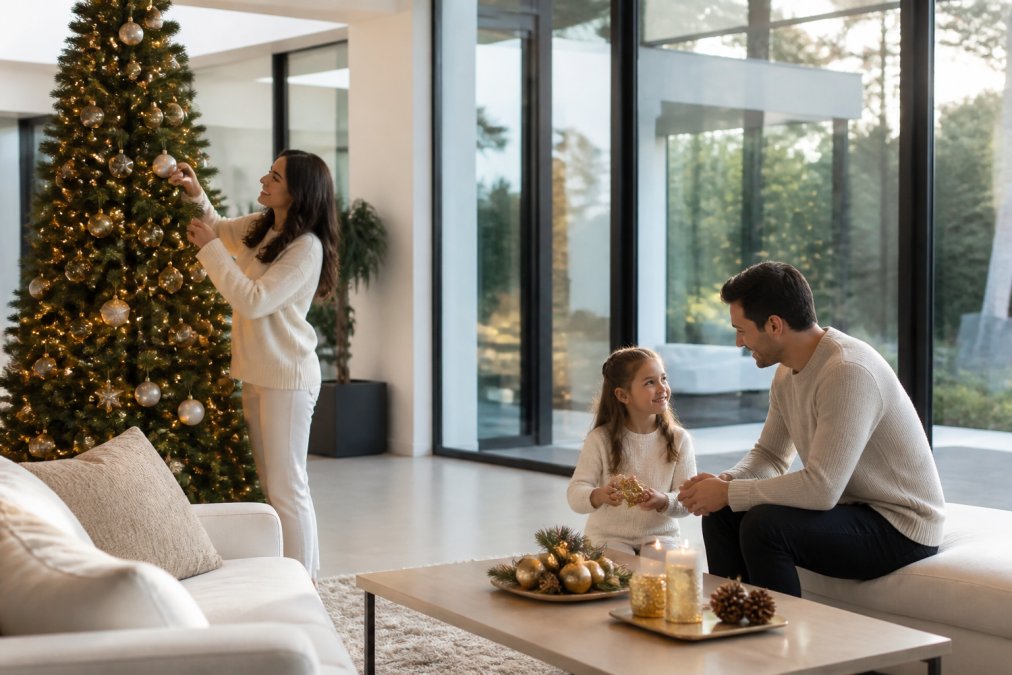
When you layer holiday elements onto contemporary architecture, the goal isn’t to fill every corner. It’s to amplify what’s already there. A sculptural evergreen installation against a glass wall becomes architectural itself. Warm ambient lighting highlighting steel beams creates drama without clutter. This approach celebrates the building’s bones instead of obscuring them.
At Houston Light, we’ve spent years refining how minimalist holiday decor enhances modern properties. The strategy works because it doesn’t fight the space, it extends it. Neutral palettes, sustainable materials, and intentional placement create festive displays that feel like they belong to the architecture rather than sitting on top of it.
The real shift happens when you stop thinking of holiday decor as decoration and start seeing it as seasonal architecture. Your modern home or commercial building already has a design language. Minimalist holiday decor speaks that same language, just with warmth and festivity woven in.
Decluttering Before You Decorate
Start with an honest audit of your space. Remove items that don’t serve a purpose or align with your design intent. This isn’t about ruthlessness, it’s about clarity. A clutter-free foundation makes minimalist holiday decor actually visible rather than lost in visual noise.
Most people decorate first and declutter later, which guarantees a crowded result. Reverse that sequence. Walk through your space and identify what stays year-round, what’s genuinely meaningful, and what’s just occupying square footage. Seasonal items should enhance, not compete.
For commercial properties, decluttering is even more critical. A busy lobby filled with existing furniture, signage, and traffic patterns leaves little room for holiday styling. Clear zones where you want impact. Remove temporary items that won’t be there in January. This creates pockets of intentional festivity rather than scattered decorations fighting for attention.
One practical mistake: keeping decorations from previous years “just in case.” Old garland, tangled lights, and mismatched ornaments create decision fatigue. Fresh materials feel intentional. They align with minimalist principles and photograph better for commercial branding.
Neutral Palettes and Monochromatic Schemes
A neutral palette isn’t boring, it’s focused. When you eliminate color competition, every element gains visual weight. Whites, creams, taupes, and warm grays create a sophisticated backdrop where strategic accents stand out.
Monochromatic schemes take this further by using variations of a single color family. Think white ornaments paired with off-white ribbon, cream garland, and ivory lighting. Or a warm gold scheme: champagne lights, bronze metallic accents, and honey-toned natural materials. The effect feels cohesive and refined.
The psychology here is simple: fewer colors mean stronger visual impact. A single sculptural wreath in white becomes a focal point. Warm ambient lighting against a neutral backdrop creates warmth without visual chaos. Botanical elements, evergreen, eucalyptus, dried branches, add texture without requiring color.
For modern architecture, neutral palettes align naturally with contemporary design. Glass, steel, and concrete backgrounds don’t demand colorful decoration. They benefit from it. A monochromatic approach respects the building’s existing aesthetic while adding seasonal warmth.
Professional Holiday Lighting Design Trends
Modern architecture presents unique lighting challenges that generic holiday displays ignore. The goal isn’t to light the decoration, it’s to use light to enhance the building’s architectural language.
Start by identifying your space’s defining features. Floor-to-ceiling windows demand a different approach than solid walls. A glass facade benefits from interior uplighting that silhouettes evergreen installations and creates depth without external fixtures that compete with the glass itself. Concrete or stone walls, conversely, respond beautifully to grazing light, positioning fixtures low and angling them across the surface emphasizes texture and creates dramatic shadow play. Open-concept layouts require strategic placement to avoid washing out sightlines; instead of uniform coverage, use pools of warm light to define zones and guide movement.
Warm white LED lights at 2700K color temperature remain the professional standard because they mimic incandescent warmth without the energy cost or heat output that damages modern materials. But placement matters more than wattage. Architectural lighting designers distinguish between task lighting (functional illumination for entries or walkways) and accent lighting (highlighting specific features). For modern spaces, accent lighting should be invisible, you see the illuminated surface, not the fixture itself. This means recessed uplights, soffit-mounted downlighting, or concealed string lights tucked into architectural details rather than visible on surfaces.
Negative space lighting is particularly effective in modern architecture because contemporary design already emphasizes emptiness and breathing room. Instead of covering every surface, illuminate 40-50% of your facade or interior, leaving the rest intentionally dark. This creates visual rhythm and prevents the oversaturated look that clashes with clean lines. For a residential modern home with a prominent roofline, light only the roofline. For a commercial building with a striking entrance, light the entry and leave upper floors subtle. This restraint amplifies impact.
Smart controls transform how you can adapt lighting throughout the season. Programmable systems allow you to adjust color temperature (shifting from cooler whites in early December to warmer tones by late December), dim during off-peak hours, or create subtle animation effects, a slow fade rather than static brightness, that feels sophisticated rather than carnival-like. For commercial properties managing multiple buildings, centralized control means you can monitor and adjust all installations from one platform, catching burned-out sections or scheduling conflicts immediately.
One often-overlooked consideration: modern architecture frequently uses large glass surfaces, which means interior lighting is visible from outside and exterior lighting reflects back into interior spaces. This creates a feedback loop. Test your lighting at dusk and after dark, both from inside looking out and outside looking in. What looks elegant from one perspective might create glare or reflection from another. Professional installers account for this by positioning fixtures to minimize reflection while maximizing the architectural feature you’re highlighting.
The intersection of architectural lighting and modern design is where minimalist holiday displays become truly effective. You’re not decorating the building; you’re using light to reveal what’s already there. For residential properties, Holiday Decorating services can handle the complete vision, while commercial properties often benefit from specialized Commercial Holiday Lighting design that accounts for brand presence and large-scale architectural features.
Energy Efficient Holiday Lighting for Commercial Buildings
LED technology has made energy-efficient holiday displays not just practical but economical. Modern commercial installations consume a fraction of the energy that traditional lighting required, which matters when you’re illuminating large buildings or multiple properties.
Smart controls amplify this efficiency. Timers ensure lights operate only when needed. Dimming features reduce energy draw during low-traffic hours. For property managers overseeing multiple buildings, centralized control systems provide real-time monitoring and adjustments from a single platform.
The payoff extends beyond utility bills. LED lighting lasts significantly longer than incandescent bulbs, reducing maintenance calls and replacement costs (Purchasing Energy-Efficient Light Bulbs). For commercial properties, this translates to fewer service visits during peak season when scheduling is already tight.
Weather-resistant LED systems designed for commercial use withstand humidity, temperature swings, and wind without degradation. This reliability matters when your holiday display represents your brand image. Flickering lights or burned-out sections undermine the elegant aesthetic you’re aiming for.
Professional installation ensures proper electrical integration and safety compliance. Commercial buildings have specific requirements around load capacity, grounding, and weatherproofing that DIY approaches miss. Working with experienced installers ensures your system meets code and performs reliably throughout the season.
Sustainable Materials and Reusable Decor Practices
Sustainability and minimalism naturally align. Both philosophies prioritize intentional choices and long-term thinking over disposable trends. Reusable materials reduce waste while improving your budget over multiple seasons.
Natural materials, fresh evergreen, dried branches, potted plants, bring organic texture without synthetic bulk. They’re biodegradable, often locally sourced, and photograph beautifully. A sculptural evergreen installation becomes a design element rather than temporary decoration.
Reusable decor pieces, metal frames, wooden structures, durable fabric elements, build a collection you refine year to year.
Budget-Conscious DIY for High-End Aesthetics
Minimalist decor naturally costs less than maximalist approaches because you’re using fewer items, but the real savings come from strategic material choices and DIY assembly that competitors don’t detail.
Post-Holiday Storage and Year-Round Planning
The minimalist approach extends beyond the season. Thoughtful storage ensures your investment lasts and next year’s installation goes smoothly.
Frequently Asked Questions
What are the best lighting techniques for minimalist holiday displays?
Warm, diffused ambient lighting works best for minimalist holiday decor. Focus on uplighting architectural features rather than filling spaces with bright accent lights. LED strips hidden along baseboards or integrated into built-in shelving create intentional illumination without visual clutter. Layered lighting, combining task, ambient, and accent, lets you control intensity and mood. Professional holiday lighting design trends increasingly emphasize quality over quantity: fewer, higher-impact fixtures positioned to enhance building lines rather than obscure them.
How can I decorate my modern architecture for the holidays without clutter?
Start by identifying three focal points: your entry, a primary living area, and perhaps an outdoor wall or entrance. Use organic textures like evergreen garland, sculptural branches, and raw materials in neutral tones. Avoid filling every surface, instead, create visual balance through negative space. Monochromatic schemes (white, cream, and warm metallics) feel sophisticated and intentional. Invest in a few high-quality pieces rather than many smaller decorations. This restraint amplifies the impact of what you do display and maintains the clean aesthetic modern architecture demands.
What materials work best for minimalist holiday decor?
Sustainable, reusable materials age beautifully and align with minimalist principles. Fresh evergreen garland, branches with natural texture, linen ribbons, and wood accents create warmth without synthetic clutter. Ceramic, concrete, or metal planters in neutral tones work for seasonal arrangements. Avoid plastic, glitter, and multi-colored ornaments. High-quality, timeless pieces you’ll use year after year reduce waste and cost over time. For commercial buildings, botanical elements and architectural lighting fixtures deliver refined aesthetics that enhance brand image while maintaining professional standards.
How do you maintain a professional aesthetic with holiday decorations in commercial spaces?
Professional holiday lighting design trends for commercial buildings focus on architectural integration and energy efficiency. Choose warm-white LED lighting that complements your building’s exterior materials and doesn’t overwhelm the structure. Install fixtures that align with existing architectural lines rather than compete with them. Keep color palettes to two or three tones maximum. Consider the sightlines from the street and parking areas, a few high-impact elements visible from a distance outperform scattered decorations. Energy efficient holiday lighting for commercial buildings reduces operating costs while maintaining the elegant, festive appearance that attracts customers and reflects positively on your brand.