Table of Contents
- Why Weatherproofing Holiday Decor Matters in Humid Climates
- Choosing Weather-Resistant Materials for Outdoor Displays
- Waterproof Electrical Connections for Holiday Lights
- Preventing Rust on Metal Holiday Decor
- UV Protection and Anti-Fading Techniques
- Storing Holiday Decorations in Humid Climates
- Seasonal Maintenance and Long-Term Care
- Frequently Asked Questions
Last Updated: September 29, 2026
Why Weatherproofing Holiday Decor Matters in Humid Climates
Humidity triggers rust, corrosion, and electrical failures that ruin installations in weeks. Weatherproofing holiday decor for humid climates is the difference between a display lasting through the season and one that fails by mid-January. Investing in durable materials ensures that your seasonal arrangements remain pristine, providing a stable foundation for curating classy holiday decor that withstands the test of time.
Houston’s subtropical climate accelerates material breakdown through high humidity, salt air, and temperature swings. Light strings that work fine in Arizona fail within a week here without proper protection.
Weatherproofing requires the right materials, strategic steps, and ongoing maintenance. Houston Light has spent over 10 years perfecting techniques to keep custom holiday displays fresh through the entire season.
Humidity causes rust, corrosion, and electrical failure. Proper weatherproofing extends display life from weeks to months and prevents costly replacements.
Choosing Weather-Resistant Materials for Outdoor Displays
Start with materials designed to handle moisture. Some fail within weeks in humid conditions; others last for years.
Best materials for humid climates:
- Resin-based decor and synthetic greenery (won’t rot or absorb water)
- Plastic wreaths and garland (lightweight, water-resistant)
- Powder-coated metal with protective finishes (rust-resistant coating)
- Stainless steel hardware and fasteners (won’t corrode)
- Exterior-grade paint and sealants (formulated for wet climates)
Avoid untreated wood, natural greenery, and bare metal, these fail fast in humidity. Plan to replace natural materials mid-season or accept shorter display life.
Modern plastic wreaths and garland look realistic, hold color better than natural versions, and are reusable for years with proper storage.
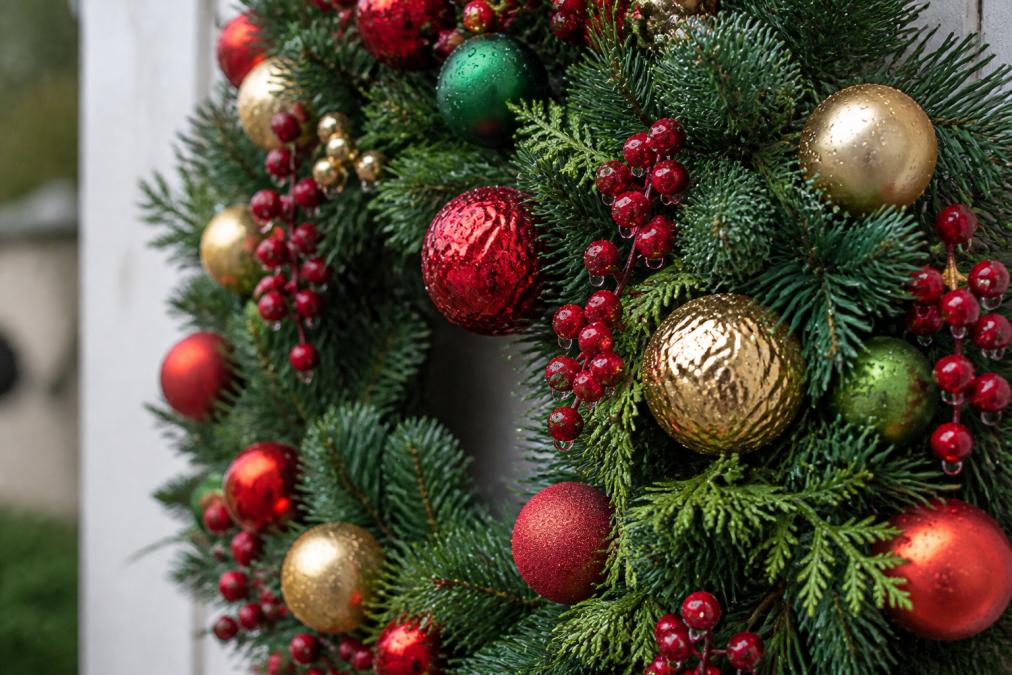
Resin-based decor costs more upfront but lasts 5-10 years with proper care. Natural materials require seasonal replacement. The math favors resin in humid climates.
Waterproof Electrical Connections for Holiday Lights
Most installations fail at electrical connections. Water corrodes wiring and causes shorts that kill entire light strings.
Secure waterproof connections with these steps:
- Use outdoor-rated extension cords rated for wet locations
- Cover all junction boxes with weatherproof electrical covers
- Seal connections with silicone-based sealant or waterproof tape
- Keep plugs elevated, never let them sit on wet ground
- Use GFCI (ground fault circuit interrupter) outlets to prevent electrical hazards
- Inspect connections weekly for moisture buildup
The most common mistake: using indoor-grade extension cords outdoors. Outdoor-rated cords have thicker jackets designed to resist water penetration.
Waterproof electrical connections are non-negotiable. Check connections after rain and before turning lights on.
Wet electrical connections create fire and shock hazards. Always use GFCI protection and inspect connections weekly. Replace any cord showing signs of water damage immediately.
Preventing Rust on Metal Holiday Decor
Metal decor corrodes fast in humid air. Rust appears within days on unprotected metal, especially near coastal areas where salt accelerates corrosion.
Protect metal decor from rust:
- Apply rust-inhibiting spray before installation
- Use exterior-grade paint on all metal surfaces
- Choose powder-coated metal (factory finish resists corrosion better)
- Seal exposed fasteners with corrosion-resistant lubricant
- Store metal pieces indoors during off-season
Rust-inhibiting spray creates a moisture barrier that stops corrosion. Apply to all exposed metal and reapply after heavy rain or every 4-6 weeks during the display season.
Powder-coated finishes outperform painted surfaces in humid climates and resist chipping better than paint. Look for powder-coated options when buying metal decor.
Stainless steel or galvanized fasteners resist rust far better than standard steel and prevent corroded hardware mid-season.
Metal decor requires active protection. Rust-inhibiting spray, exterior paint, and corrosion-resistant fasteners are non-negotiable in humid climates.
UV Protection and Anti-Fading Techniques
UV rays penetrate and degrade plastics, painted surfaces, and synthetic fabrics. Humidity accelerates this by opening material surfaces and allowing deeper UV penetration.
Humidity accelerates UV damage by opening microscopic pores in plastic and resin, causing material expansion and contraction, promoting algae and mold growth, and weakening paint adhesion. This dual attack causes synthetic decor to fail 2-3 times faster in humid climates than in dry regions.
Apply UV-protectant spray before installation on clean, dry surfaces. Reapply every 8-10 weeks or after heavy rain. Use outdoor-rated formulas for plastic and resin. For plastic greenery, light misting is sufficient; for painted metal and wood, apply thicker coats.
Unprotected plastic fades within 4-6 weeks and becomes brittle within 3-4 months. UV-treated plastic resists fading for 2-3 seasons with reapplication every 8-10 weeks. Resin decor lasts 2-3 seasons without protection, 4-5 with spray. Synthetic fabric fades within 2-3 weeks of direct sun. Powder-coated metal lasts 1-2 seasons without supplemental UV spray, 2-3 seasons with it.
Bright white, red, pale gold, and pastels fade fastest. Deep burgundy, navy blue, forest green, black, and charcoal gray resist fading. Choose jewel tones for longevity or plan mid-season replacement for bright, traditional colors.
North-facing walls and eaves provide best protection. East-facing walls offer moderate exposure. West and south-facing walls require mid-season rotation or replacement. Dappled shade reduces UV by 40-60%.
UV-blocking clear coats over painted surfaces last longer than spray.
UV damage accelerates 2-3x faster in humid climates due to moisture opening material surfaces. Reapply UV protectant spray every 8-10 weeks, choose deep colors over pastels, and position high-value decor in shaded areas to maximize display lifespan.
Storing Holiday Decorations in Humid Climates
Improper storage causes mold, mildew, rust, and material degradation. Storage practices often determine whether a display lasts five years or fails in two.
DIY desiccant solutions for storage bins:
- Silica gel refill: Buy bulk silica gel (the same material in commercial packs) and fill small cloth pouches or old socks. Place 2-3 pouches per large storage bin. Replace every 3-4 months during off-season.
- Calcium chloride: More effective than silica gel in extremely humid environments. Available in hardware stores as a desiccant product. Place in breathable pouches inside bins. Calcium chloride absorbs more moisture than silica gel but requires replacement more frequently (every 2-3 months).
- Uncooked rice: A budget option for small containers. Fill cloth pouches with uncooked rice and place inside bins. Rice absorbs moisture but less effectively than silica gel. Replace monthly. Not recommended for valuable decor.
- Baking soda: Sprinkle directly in bins or use in small open containers. Less effective than other methods but helps reduce odors and minor moisture. Replace monthly.
Humidity-controlled storage environment:
- Climate-controlled garage or interior closet: Best option. Maintains stable humidity and temperature year-round.
- Attic: Risky in humid climates. Summer heat and humidity create ideal conditions for mold. Winter temperature swings stress materials. Use only if you can monitor humidity with a meter and maintain desiccant packs.
- Basement: Often too humid. Basements in humid regions frequently experience moisture seepage, especially during rainy seasons. Avoid unless the space is actively dehumidified.
- Outdoor shed or storage unit: Worst option. Temperature and humidity fluctuate wildly, accelerating material degradation. Metal rusts faster. Plastic becomes brittle. Only use if climate-controlled.
Material degradation timelines in humid storage:
- Untreated wood: Begins visible rot within 6-12 months of humid storage. Mold appears within 4-8 weeks.
- Natural greenery: Decomposes within 2-4 weeks. Not worth storing; replace annually.
- Bare metal: Surface rust appears within 2-4 weeks. Deep corrosion within 3-6 months.
- Powder-coated metal: Resists corrosion for 2-3 years with proper storage. Longer if desiccant packs are used.
- Unprotected plastic: Becomes brittle and discolored within 1-2 years. UV-treated plastic lasts 3-5 years.
- Resin decor: Lasts 5-10 years with proper storage. Prone to surface cracks if exposed to temperature extremes.
- Fabric (untreated): Mold appears within 4-8 weeks. Rot within 6 months.
- Light strings (standard insulation): Corrosion inside cords begins within 2-4 weeks of humid storage. Failure within 6 months.
Monthly storage maintenance:
- Open bins and inspect for moisture, mold, or mildew
- Replace desiccant packs if they feel damp or clumped
- Wipe down any visible moisture inside containers
- Check metal pieces for new rust spots
- Ensure bins remain sealed and lids close properly
- Verify storage area temperature and humidity remain stable
Desiccant packs cost pennies but prevent mold that ruins decor. Replace them every 3-4 months during off-season storage. For large collections, DIY silica gel pouches reduce costs by 60-70% versus commercial packs.
Seasonal Maintenance and Long-Term Care
A few minutes of maintenance each month keeps your display looking fresh and prevents costly failures.
Monthly maintenance checklist:
- Inspect all electrical connections for moisture or corrosion
- Check metal decor for rust spots and touch up with rust-inhibiting spray
- Wipe down plastic and resin pieces to remove dust and salt residue
- Test all light strings to confirm they’re working
- Tighten any loose fasteners or connections
- Replace any damaged weatherproofing sealant
- Check storage areas for signs of humidity or mold
Frequently Asked Questions
What materials are best for outdoor holiday decor in high-humidity climates?
Synthetic greenery, resin-based decor, plastic wreaths, and exterior-grade painted metal are ideal for humid environments. Avoid untreated wood, natural greenery, and standard plastic that degrades under UV exposure. Look for outdoor-rated lighting fixtures rated for wet locations and corrosion-resistant metals like powder-coated aluminum or stainless steel. These materials resist mold, mildew, and rust while maintaining appearance throughout the season.
How do I protect electrical connections from moisture during the holidays?
Use waterproof electrical connections with gasket seals and GFCI-protected outlets rated for wet locations. Apply polyurethane sealant around all junction boxes and connection points. Cover exposed connections with weatherproof caps and keep cords elevated away from pooling water. Inspect connections monthly for corrosion or damage. Professional installers ensure all connections meet electrical codes and include proper moisture barriers to prevent short circuits.
How do I store holiday decorations to prevent mold and mildew in humid climates?
Store decorations in airtight containers with desiccant packs to control humidity. Clean all items thoroughly before storage and ensure they’re completely dry. Use moisture barriers like plastic liners inside storage bins. Keep storage areas well-ventilated and elevated off the ground to prevent water damage. Replace desiccant packs periodically throughout storage. Consider humidity-controlled storage spaces or climate-controlled units for valuable decorations, which extends storage longevity significantly.
What’s the best way to weatherproof holiday decor for humid climates?
Weatherproofing holiday decor involves multiple steps: select weather-resistant materials, apply protective coatings like exterior-grade paint or polyurethane sealant, ensure waterproof electrical connections, and use UV-protectant spray on fading-prone items. Install decor in locations protected from direct water exposure when possible. Use corrosion-resistant hardware and fasteners. Regular seasonal maintenance, cleaning, inspecting for damage, and resealing, maintains weatherproofing effectiveness throughout the display season and extends the life of your decorations.