Table of Contents
- Custom Holiday Lighting Ideas That Elevate Curb Appeal
- Roofline and Gutter Outlining for Maximum Visual Impact
- Wrapping Trees and Shrubs in Festive Glow
- Professional Holiday Lighting Installation with Smart LED Control
- Energy-Efficient LED Holiday Lights for Long-Term Savings
- Outdoor Decorative Lighting Trends Shaping 2026
- Pathway and Accent Lighting to Guide Holiday Guests
- Frequently Asked Questions
Last Updated: September 24, 2026
Custom Holiday Lighting Ideas That Elevate Curb Appeal
The difference between a forgettable house and one that stops traffic comes down to thoughtful design. Custom holiday lighting ideas transform ordinary homes into festive showcases that capture attention and create genuine holiday spirit. At Houston Light, we help homeowners understand that professional installation isn’t just about stringing lights, it’s about creating a cohesive vision that complements your home’s architecture and landscape.
The best custom holiday lighting ideas work because they treat your home as a complete canvas. Rather than randomly placing lights, they follow sight lines, highlight architectural features, and create depth through strategic color and intensity choices. When done well, the result feels intentional and elegant rather than cluttered.
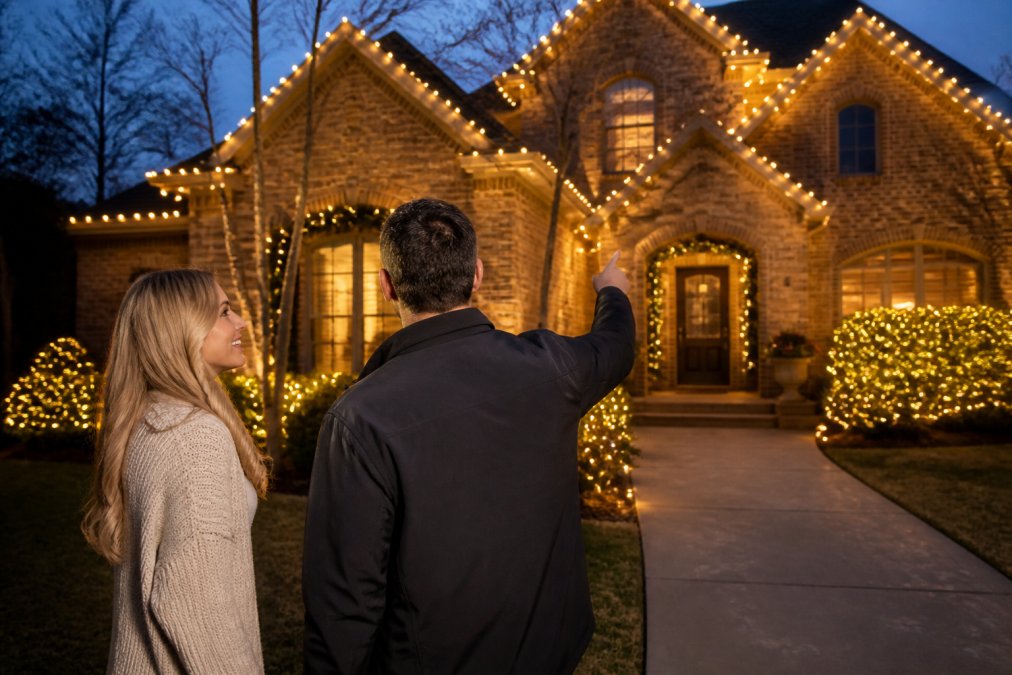
What separates a truly custom approach from standard installations is attention to detail. The best displays account for your home’s existing features, the texture of your siding, the shape of your roofline, the mature trees in your yard. They use these elements strategically rather than fighting against them.
Start by photographing your home at dusk from the street. This shows you exactly what neighbors and guests actually see, and it helps you identify which architectural features deserve emphasis.
Roofline and Gutter Outlining for Maximum Visual Impact
Roofline and gutter outlining creates the architectural frame that makes everything else work. This technique traces the outer edge of your roof against the night sky, essentially drawing the silhouette of your home in light. It’s one of the most professional-looking applications because it respects your home’s actual structure rather than obscuring it.
The visual impact comes from the contrast between the illuminated roofline and the dark sky behind it. C9 bulbs are traditional here, but modern LED options deliver the same warm glow with far less power consumption. String lights placed along gutters and fascia boards create clean, defined lines that frame your home’s upper profile.
Installation matters significantly. Proper mounting clips and secure fastening prevent lights from sagging or shifting throughout the season. Weatherproof connections protect against moisture damage, which is critical in humid climates. Most professional installations use clips specifically designed to grip gutters without damaging them, and they space lights evenly to create that polished appearance.
The real challenge with roofline outlining is safety. Working at height requires proper equipment, experience, and insurance coverage. This is precisely why many homeowners turn to professional installation, the peace of mind that the job is done correctly and safely matters as much as the final look.
Never attempt roofline work without proper safety equipment and experience. Falls from heights cause serious injuries. Professional installers have insured labor and the right tools for the job.
Wrapping Trees and Shrubs in Festive Glow
Tree wrapping transforms your landscaping into glowing focal points. This technique involves spiraling lights around tree trunks and branches, creating vertical columns of light that draw the eye upward. When done thoughtfully, it adds dimension to your landscape and makes mature trees become part of your holiday design rather than just backdrop.
The wrapping pattern matters. Loose, irregular spirals feel natural and organic. Tight, geometric patterns look more structured and modern. Your choice should match your home’s style and the overall aesthetic you’re creating. Evergreen shrubs near your entrance work beautifully with wrapped lighting because they already have dense foliage to anchor the lights.
LED string lights work best for this application because they generate minimal heat and won’t damage tree bark over the season. The color-changing options available now let you shift between warm white and cool tones, or even add subtle color accents. Many homeowners prefer warm white for a classic festive feel, but cool white creates a more contemporary look.
Spacing and density determine the visual impact. Lights placed too sparsely look thin and incomplete. Lights packed too densely can look overwhelming. The sweet spot is typically one light every 6 to 12 inches along the wrapping path, adjusted based on the tree’s size and your preference for brightness.
Professional Holiday Lighting Installation with Smart LED Control
Smart LED control transforms holiday lighting from static decoration into an interactive experience. App-controlled systems let you adjust brightness, timing, and color from your phone. You can set lights to turn on at sunset automatically, dim them during late-night hours, or change colors for special occasions.
The technology has matured significantly, but integration requires planning. Modern smart systems integrate with voice assistants and home automation platforms, making control seamless, but compatibility matters. Before purchasing, verify that your chosen system works with your existing smart home hub (Amazon Alexa, Google Home, Apple HomeKit, or Samsung SmartThings). Not all outdoor lighting controllers support all platforms. Professional installers can recommend systems that integrate cleanly with your current setup, avoiding the frustration of buying incompatible equipment.
Weather resistance is built into quality smart systems. Outdoor-rated controllers and weatherproof connections protect electronics from moisture and temperature swings. Look for systems rated IP65 or higher for reliable outdoor performance. The investment in professional-grade equipment pays dividends through reliability and longevity.
Scheduling becomes effortless once properly configured. Your lights follow your preferred timing without manual adjustment. For commercial properties and HOA common areas, this automation reduces maintenance burden and ensures consistent appearance throughout the season. Many systems also offer geofencing, which automatically turns lights on when you arrive home and off when you leave, adding both convenience and security.
Common integration challenges include network connectivity in areas with weak WiFi coverage and firmware updates that occasionally reset custom schedules. Professional installers typically position controllers within strong signal range and handle initial configuration to prevent these issues. They can also advise on mesh network solutions if your yard extends beyond standard WiFi reach.
Smart LED systems eliminate manual on/off routines, but success depends on choosing compatible equipment and proper installation. Professional setup ensures your system integrates smoothly with your existing smart home infrastructure.
Energy-Efficient LED Holiday Lights for Long-Term Savings
Energy-efficient LED holiday lights use a fraction of the power that traditional incandescent bulbs require. A string of LED lights might draw 5-10 watts, while the same length in incandescent could draw 50+ watts. Over a season running nightly, the difference in electricity costs becomes meaningful. LED bulbs also last significantly longer than incandescent options. While traditional bulbs might survive one or two seasons, quality LED lights often outlast five or more seasons of use. This longevity reduces replacement costs and the waste associated with constantly buying new strings.
The color quality of modern LED lights has improved dramatically. Warm white LEDs now deliver the nostalgic glow that many people prefer for holiday decorating. Cool white options work beautifully for contemporary homes. RGB color-changing LEDs add creative possibilities without requiring multiple separate installations.
Heat generation is another advantage of LEDs. Because they produce minimal heat, they’re safer around flammable materials like dried wreaths and garland. They won’t damage siding or landscaping the way heat-generating incandescent bulbs can over extended use.
Maximizing that lifespan requires proper storage and maintenance. After the season ends, allow lights to dry completely before storing them. Moisture trapped in connectors or around bulbs causes corrosion and shorts that fail silently when you power them up next year.
Invest in a dedicated storage container or shelving system for holiday lighting. The organization saves time during setup and protects your investment from damage. Many homeowners find that proper storage extends LED light lifespan by 2-3 additional seasons.
Outdoor Decorative Lighting Trends Shaping 2026
Outdoor decorative lighting trends are moving toward personalization and sustainability. Homeowners increasingly want displays that reflect their individual style rather than following generic templates. This shift favors custom design over cookie-cutter approaches.
Pathway and Accent Lighting to Guide Holiday Guests
Pathway lighting serves both practical and aesthetic purposes. It guides guests safely from the street to your entrance while adding visual interest to your landscape. Uplighting, which aims light upward at trees or architectural features, creates drama and depth in your outdoor space.
Frequently Asked Questions
What are the latest trends in outdoor decorative lighting for holiday displays?
The 2026 holiday season is seeing a shift toward app-controlled smart LED systems that allow homeowners to adjust color, brightness, and effects from their phones. Architectural highlighting, focusing on rooflines, columns, and architectural features, is replacing generic string light approaches. Color-changing lights and synchronized twinkling effects are becoming standard rather than novelty. Energy-efficient LED technology dominates, with weatherproof installations designed for durability across multiple seasons. Professional installers are emphasizing quality over quantity, creating dazzling displays that enhance curb appeal without overwhelming the home’s natural architecture.
How do I achieve a professional look with custom holiday lighting on my home?
Professional results depend on three factors: strategic placement, quality materials, and proper installation. Start by outlining your roofline and gutter with warm-white or color-changing C9 bulbs to frame your home’s silhouette. Wrap trees and shrubs with string lights to create depth and dimension. Use mounting clips and secure fastening to prevent sagging or weather damage. Layer your lighting with pathway illumination to guide guests and highlight landscaping. Professional installers ensure correct voltage, proper extension cord management, and weatherproof connections. The difference between DIY and professional installations is typically visible in the consistency, durability, and overall visual impact of the display.
Are energy-efficient LED holiday lights worth the investment compared to traditional bulbs?
Yes. LED holiday lights use approximately 80% less electricity than incandescent bulbs, which reduces your power consumption significantly over a full season. A string of 100 LEDs draws roughly 0.5 watts per foot, compared to 4-5 watts for traditional bulbs. Over a 60-day holiday season running 8 hours daily, the energy savings are substantial. LEDs also last 25,000+ hours versus 1,000 hours for incandescent bulbs, meaning you replace them far less frequently. While LEDs cost more upfront, the long-term savings on electricity and replacement bulbs make them the economical choice for homeowners planning multi-year displays.
What should I consider before hiring a professional for custom holiday lighting installation?
Verify that the installer carries liability insurance and offers a warranty on their work, this protects you if something goes wrong during installation. Ask about their experience with homes similar in size to yours; not all installers handle large properties equally well. Discuss timeline upfront to ensure they can complete the installation before peak holiday season. Clarify what’s included in their service: do they handle takedown and storage, or just installation? Request references from recent projects. Understand the maintenance requirements after installation, professional systems typically require minimal upkeep beyond occasional bulb checks and cleaning. Get a detailed estimate in writing so there are no surprises.